
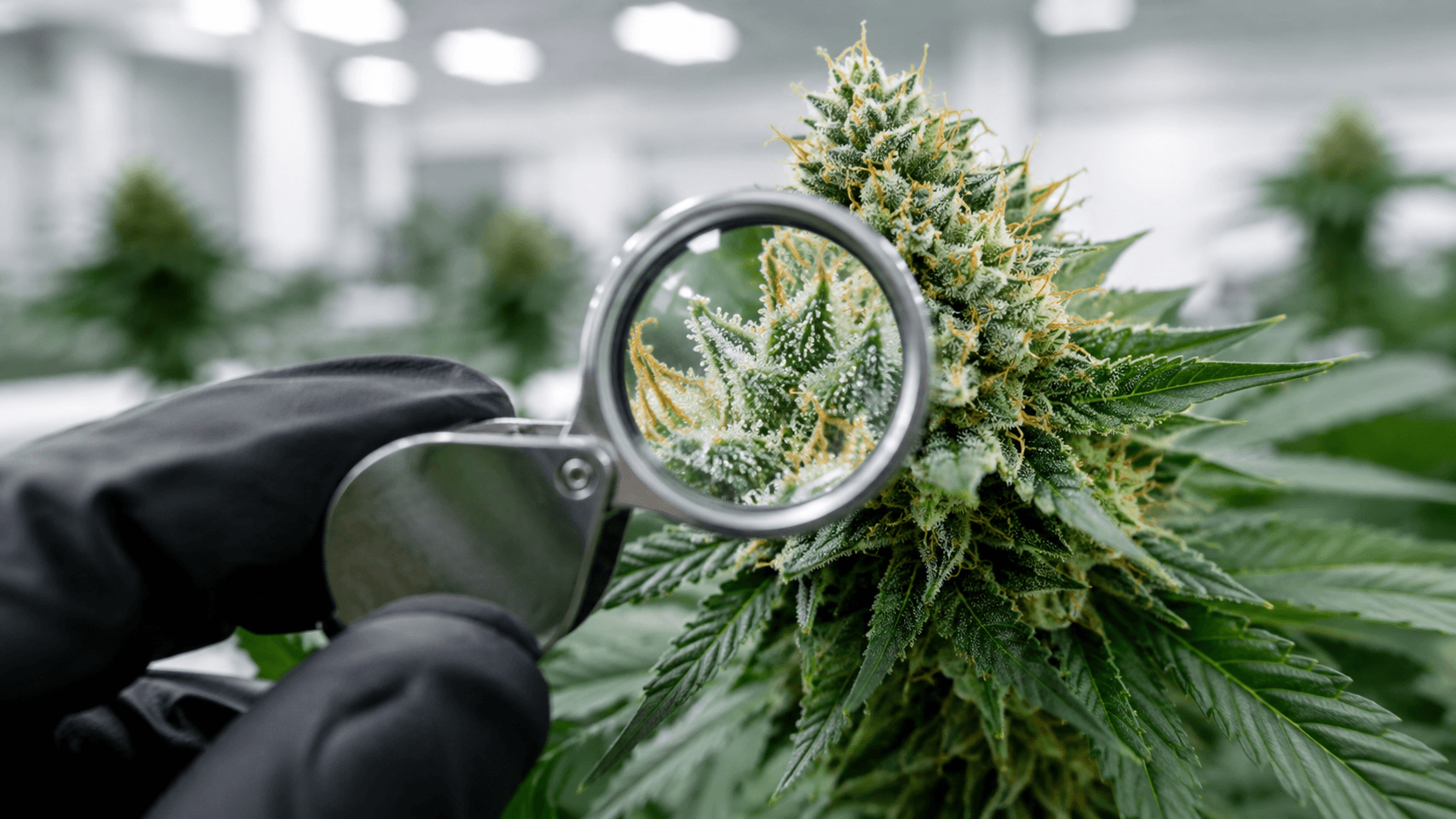
Harvest timing is one of the most important decisions in cannabis cultivation.
Cutting plants too early can result in underdeveloped flowers, lower cannabinoid expression and a less complete aroma profile. Waiting too long can reduce freshness, alter the plant’s chemical profile and increase the risk of quality loss.
Experienced growers do not rely on a single sign. They assess the plant as a whole, with particular attention to trichomes, flower development, pistil maturity, plant health and the intended outcome of the crop.
Why Harvest Timing Matters
Cannabis flowers continue developing throughout the flowering stage. During this period, the plant produces cannabinoids, terpenes and resin-rich trichomes.
The timing of harvest can influence:
- Cannabinoid development
- Aroma and terpene retention
- Flower density and appearance
- Resin production
- Drying and curing outcomes
- Overall consistency from batch to batch
A harvest window is not always one exact day. It is usually a short period during which the crop has reached the grower’s target maturity.
Trichomes: The Main Visual Indicator
Trichomes are the small resin glands found on cannabis flowers and nearby leaves. They contain many of the compounds associated with cannabis, including cannabinoids and terpenes.
Growers commonly inspect trichomes using a jeweller’s loupe, handheld microscope or camera with macro capability.
Clear Trichomes
Clear trichomes are generally associated with earlier flower development.
At this stage, resin glands may still be forming and the flower may not yet have reached its desired maturity. Harvesting very early can result in a less developed product.
Cloudy or Milky Trichomes
Cloudy or milky trichomes are often seen as a sign that the flower is approaching peak maturity.
This is commonly the point at which growers begin monitoring plants closely, especially if the crop has reached the expected flowering time for its genetics.
Amber Trichomes
As flowers mature further, some trichomes may turn amber or golden.
The desired proportion of cloudy and amber trichomes varies depending on the cultivar, the grower’s production goals and the intended product profile. There is no single ratio that applies to every plant or every harvest.
Pistils: A Useful but Secondary Sign
Pistils are the hair-like structures that emerge from cannabis flowers.
Early in flowering, pistils are often white and upright. As the flower matures, many may darken to orange, red or brown and begin to curl inward.
Pistil colour can provide a useful indication of maturity, but it should not be used on its own.
Environmental stress, genetics and handling can affect pistil development. Growers usually confirm what they see in the pistils by inspecting trichomes and the overall condition of the flower.
Flower Swelling and Structure
As cannabis approaches harvest, flowers often become fuller and more developed.
Growers may look for:
- Calyxes that appear swollen
- Dense, well-formed flower clusters
- Increased visible resin production
- Mature flower structure
- Reduced appearance of new white pistils
The exact appearance varies between cultivars. Some plants naturally produce dense, compact flowers, while others have a looser structure even when fully mature.
The Cultivar’s Expected Flowering Time
Most cannabis cultivars have an estimated flowering period. Growers use this as a planning guide rather than a fixed rule.
A cultivar labelled as an eight-week flowering plant may still need more or less time depending on factors such as:
- Growing environment
- Light intensity
- Temperature
- Plant health
- Nutrition
- Root-zone conditions
- Phenotype variation
- Stress during flowering
Commercial growers often track each cultivar over multiple production cycles to establish a reliable harvest window for their specific facility.
Plant Health Before Harvest
A mature flower is not automatically ready for harvest if the plant is under significant stress.
Growers monitor for issues such as:
- Powdery mildew
- Botrytis or bud rot
- Pest activity
- Excessive leaf damage
- Nutrient imbalances
- Heat stress
- Overwatering or underwatering
- Environmental instability
In some cases, a plant may need to be harvested earlier than planned to protect the remainder of the crop. In other cases, corrective action may allow the flowers to continue developing.
Why Growers Inspect More Than One Plant
Plants of the same cultivar do not always mature at exactly the same speed.
Differences can occur because of phenotype variation, light distribution, airflow, plant size and position within the grow space.
For this reason, growers often inspect multiple plants and multiple flower sites before deciding to harvest. Top flowers exposed to stronger light may mature differently from lower flowers within the canopy.
A consistent harvest decision requires looking beyond one attractive bud.
Harvest Timing Is Also About Production Planning
For commercial growers, harvest timing affects more than crop quality.
The decision may also influence:
- Labour scheduling
- Drying-room availability
- Trimming capacity
- Batch tracking
- Testing timelines
- Packaging schedules
- Inventory planning
A crop may be biologically close to maturity, but the harvest still needs to be coordinated carefully to ensure that drying, curing and quality-control processes are ready.
What Happens if Cannabis Is Harvested Too Early?
Harvesting too early can lead to flowers that are less developed than intended.
Possible outcomes include:
- Smaller or less dense buds
- Lower resin development
- Less developed aroma
- Reduced overall yield
- A less mature appearance
- Inconsistent product quality
Early harvest may sometimes be necessary because of pests, disease or environmental problems, but it is generally not the preferred outcome.
What Happens if Cannabis Is Harvested Too Late?
Waiting too long can also create problems.
Potential issues include:
- Declining flower freshness
- Increased risk of mould or bud rot
- Greater exposure to pests
- Over-mature trichomes
- Reduced visual quality
- Higher risk of plant stress late in flowering
The ideal harvest point is usually a balance between mature flower development and avoiding unnecessary decline.
The Role of Drying and Curing
Harvest is not the end of quality control.
Even perfectly timed flowers can lose quality if drying and curing are poorly managed. Growers must control temperature, humidity, airflow and handling after harvest to preserve aroma, structure and overall quality.
The best cultivation practices are supported by careful post-harvest processing.
The Bottom Line
Growers judge cannabis harvest readiness by combining several indicators:
- Trichome maturity
- Pistil development
- Flower swelling and structure
- Expected flowering time
- Plant health
- Environmental conditions
- The cultivar’s known behaviour
No single sign tells the whole story.
The most reliable harvest decisions come from close observation, consistent crop records and careful evaluation of the plant from flower development through to post-harvest handling.